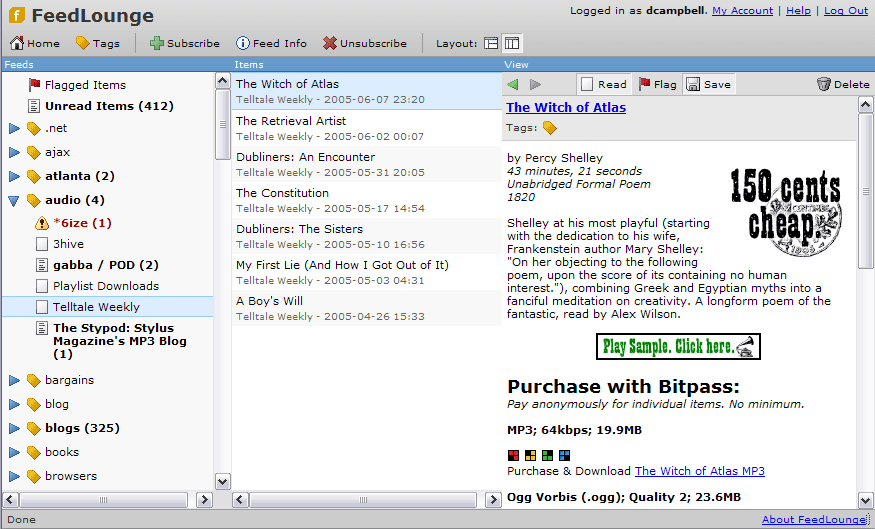
I have been using Thunderbird’s feed reading features for a while, but I have become increasingly frustrated with its (currently) clunky interface and slow response. I’m sure that they’ll improve it eventually, but they’ve been pretty slow to release new builds in the past. I’ve also used other feed aggregators such as Feedreader, Syndirella, and Sharpreader in the past. FeedLounge has all of the core features you could want from those programs: a choice of two different pane layouts, sensible keyboard shortcuts, and OPML import (no export yet, but I’m sure that will come eventually).
One difference in FeedLounge is the use of tags. You can tag both feeds and the items within the feeds. Feed tags are used to categorize feeds into topic areas similar to how you might use category folders. Except that since you can have overlapping tags, a feed might appear multiple times, under different tags. This is a good thing. For instance, if you tagged one site with the tags “perl programming” and another site with “python programming”. If you were hunting down the latest perl news, only the first site would show up under the “perl” tag. But if you wanted to read about the latest trends in programming across multiple disciplines, just look under the “programming” tag to see sites for all the types of code you’re interested in.
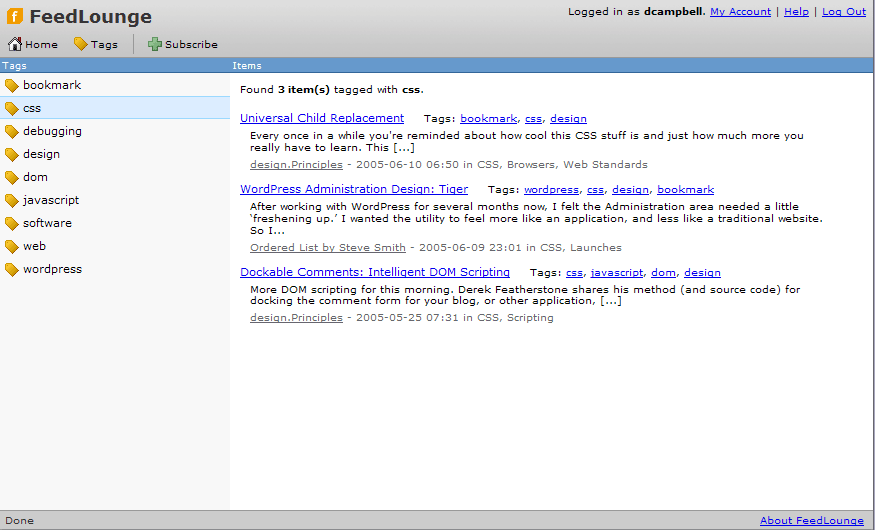
Likewise, you can tag indidivual items with their own tags. Sometimes when you’re searching for somthing in particular, you don’t want to have to wade through all the articles in a feed, or do a general search for a few keywords. If you know that you’re going to want to refer back to a particular posting at a future time, then item tags are just the thing. You might create a “bookmark” tag for articles that you know you want to read again later. Or how about tags for “work-related”, or even “send-to-mom”? The tags for items get their own display, separate from feed tags, so it’s easy to organize things. Think of item tags sort of like the “search folders” in Thunderbird, or the “labels” in Gmail, if you’re familiar with those.


Whoa! It’s beautiful. I hope they contact me soon so I can try it out…
[...] Posted June 10th, 2005 in General by Alex Dougal Campbell has written the first in-depth review of FeedLounge. (Note: there are [...]
Extra-links per il weekend
* Marco segnala FeedLounge (in alpha), un nuovo feed reader web based e anch’esso con tecnologia Ajax. Molto cool la possibilità di taggare i post come vuoi, una funzionalità che manca a Bloglines. Qualcuno ha già postato le prime impressioni.
* Ta…
New Web-based RSS reader for Firefox users
Firefox users get tired and frustrated running into sites that only work with Internet Explorer. FeedLounge is, for now, refreshing revenge. It’s a new, Web-based RSS reader that works only with Firefox. That’s not necessarily by design — FeedLounge…
Hey!
Don’t forget t3h Blox0r!
Best web aggregator ever!
All XUL, all gecko, all rox0r!
http://www.bloxor.com
[IMG ]
that looks nice from a technical point of view (i.e. the desktop-app nature of it). on the other hand, i don’t like 3-pane RSS readers much any more, so i’m sure i’ll stick with bloglines for now…
I’m interested to see how this compares to NewsGator. With their acquisition of FeedDemon, I think that NewsGator is goin’ to do something rather cool by purging together offline and online feed reading. But i’m sure Alex has made something that can compete with that.
FeedLounge: Tagging and Renaming
Two things I’m really, really loving about Feedlounge:
Tagging feeds. As Dougal notes, you can tag feeds to give you clouds of feeds. He uses the “perl programming” “php programming” example, which really should be a…
[...] rating a lot of buzz. From the sound of it I’m already preparing to make the switch. Reading others talk about rss I’m always surprised by the number of people who use [...]
looks like a good program
[...] and fully featured paid subscription accounts. [via my WordPress Dashboard which was via Dougal]
This entry was posted
on Sunday, [...]
[...] to create a thin-client-like experience, and the early alpha testers are coming back with very positive reviews: “FeedLounge often feels much more like a desktop application than [...]
[...] when we did? No. Are our alpha users jumping up and down about how kick-ass we are? You bet. 4. Sure, early and often works in open source, there is no reason it wouldn’t wor [...]
[...] Blog alemine bir kez daha teÅŸekkür etmem gerekiyor. Bir zincir ÅŸeklinde beni ÅŸu anda internet teknolojisi olarak en yeni olarak kabul edilen Ajax’a ulaÅŸtırdıkları için. Zinciri silsile ÅŸeklinde saymam sanırım sizin içinde faydalı olur. İlk kaynak alexking Gerçekten çalışmalarını ve üretkenliÄŸini takdir etmemek elde deÄŸil. Åžu anda geliÅŸtirmekte oldukları online feed reader projesi için bayağı zaman harcadıkları ortada. Google’ın pazar politikasında olduÄŸu gibi ÅŸu anda davetiye usulü hizmet veriyor ve sadece firefox browserını destekliyorlar. Alex King’in bloguna bakarken, feedlounge ‘un eleÅŸtirisini yapan Dougal Gunters’in sitesine ulaÅŸtım. Aslında Alex’in ve diÄŸer arkadaÅŸlarının içinde olduÄŸu gurubun yaptığı çalışmanın Ajax denilen yeni bir teknolojiler bütünün ortaya çıkışı olduÄŸunu öğrendim. Son durakta Jesse James Garrett’in Ajax’ın ne olduÄŸu, neden böyle biÅŸeye ihtiyaç duyulduÄŸu ve nasıl olacağı hakkındaki yazısına ulaÅŸtım. [...]
[...] I’m one of the lucky alpha testers who have had access for the last six months. I committed to using FeedLounge as my only feed reader, dumping SharpReader and the RSS capabilities of Thunderbird. I’ve watched FeedLounge go through some rough spots, and it always came back better than before. Alex and Scott have done an outstanding job with everything from the great AJAXian user interface to the invisible backend. When the time comes, if the price is right, I’m going to be a paying customer. [...]
[...] goal was to create a thin-client-like experience, and the early alpha testers are coming back with very positive reviews: 网站创始人之一,Scott [...]
[...] Scott Sanders, one of the founders, writes in his blog that he created FeedLounge as a web-based application because he works From many different machines. Their goal was to create a thin-client-like experience, and the early alpha testers are coming back with very positive reviews: [...]